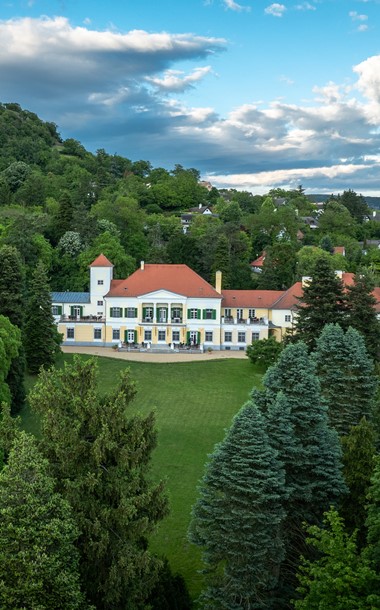
ESTERHÁZY CASTLE
Literary Creative House
The castle was built in the early 1840s by Baron József Puteani (1811–1869), son of Krisztina Lengyel de Tóth (1782–1814) and Baron Vencel Puteani (1779–1810). Following the death of his mother, József Puteani took over the management of the Szigliget estates in 1830. In 1835, he married Paulina Zarka, and the marriage produced four children: Róza (1836–1919), Ödön (1840–?), Géza (1847–1920), and Vilma (1850–?). The Lengyel de Tóth and Puteani families owned Szigliget for nearly 400 years, including 82 years under the ownership of the baronial Puteani family. These landowning families contributed significantly to the development of the village and the establishment of its historical agricultural economy. The castle acquired its present appearance after 1912, when Géza Puteani was forced to sell the ancestral estate after squandering much of his fortune on horses and women. The estate was purchased by Count Pál Esterházy (1861–1932), whose ownership brought major transformations both to the manor economy and the castle itself. After his death, the property passed to his widow, Isabella Deym, who remained the owner until the arrival of Soviet troops in Szigliget during the Second World War. Following the war, the building briefly functioned as an agricultural vocational school. Since 1952, largely through the initiative of the Kossuth Prize-winning writer and journalist György Bölöni, the castle has operated as a Literary Creative House. Today it is managed by the Hungarian Public Benefit Nonprofit Ltd. for Creative Arts. From its opening onward, the castle became a beloved retreat and creative residence for many of the most distinguished figures of Hungarian literature. Among its former guests were István Örkény, Zoltán Zelk, Lajos Kassák, Ágnes Nemes Nagy, Péter Esterházy, Magda Szabó, Imre Kertész, János Pilinszky, László Németh, István Fekete, Ervin Lázár, Sándor Weöres, Tibor Déry and Árpád Göncz, among many others. Even today, the Literary Creative House continues to host prominent contemporary writers, poets, artists, composers, photographers, and intellectuals. Since the 1970s, increasing numbers of painters, sculptors, applied artists, photographers, and composers have also become regular visitors. With its 29 guest rooms, a library of 10,000 volumes, private kitchen and restaurant, terraces, lookout tower, community spaces, protected parkland, affordable prices, and warm hospitality, the Esterházy Castle Literary Creative House warmly welcomes its guests.
The Castle Park – Szigliget Arboretum
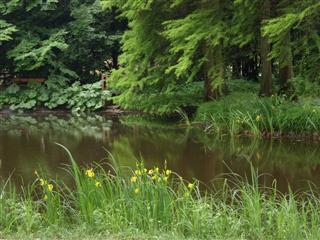
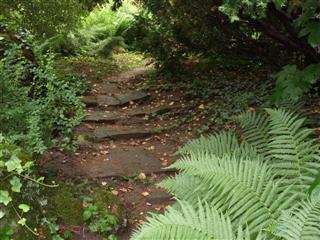
The castle park, much like the building itself, has been immortalised in numerous literary and artistic works. This is hardly surprising, as visitors strolling through the 10-hectare landscape garden are enchanted at first sight by the countless wonders of nature.
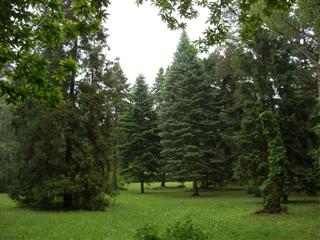
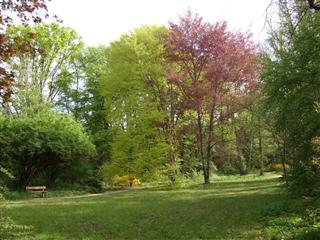 The establishment of the park dates back to the period when the castle itself was built. In the deepest part of the garden, near the Tapolca Stream, stand the oldest trees of the estate: 200–250-year-old yews, white poplars, horse chestnuts, pedunculate oaks, lindens, beeches, and plane trees. During the second half of the 19th century, various conifer species and other evergreen trees were planted around them. The garden experienced its golden age under the Esterházy family during the 1920s and 1930s. Its area was doubled, and the newly expanded sections were planted with exotic conifers and evergreen species imported from nurseries in Vienna, Bratislava, and Budapest. As a result, one of Hungary’s largest conifer collections was established here. According to a survey conducted by József Papp in 1967, the number of plant species reached 520, including approximately 150 conifer species.
 The establishment of the park dates back to the period when the castle itself was built. In the deepest part of the garden, near the Tapolca Stream, stand the oldest trees of the estate: 200–250-year-old yews, white poplars, horse chestnuts, pedunculate oaks, lindens, beeches, and plane trees. During the second half of the 19th century, various conifer species and other evergreen trees were planted around them. The garden experienced its golden age under the Esterházy family during the 1920s and 1930s. Its area was doubled, and the newly expanded sections were planted with exotic conifers and evergreen species imported from nurseries in Vienna, Bratislava, and Budapest. As a result, one of Hungary’s largest conifer collections was established here. According to a survey conducted by József Papp in 1967, the number of plant species reached 520, including approximately 150 conifer species.
 At the northern end of the garden stands a garden pavilion (filagória) supported by eight stone columns and covered with purple wisteria, reached by a stone staircase with wrought-iron railings. From beside the old pump house near the former kitchen garden, as well as from the stream-side edge of the pond, visitors can enjoy an excellent view of the Szigliget Castle — the “obligatory ruin” traditionally featured in Romantic landscape gardens. In addition to its valuable plant collection, the park is also home to significant works of art, including Pál Pátzay’s sculpture Woman with Towel, Miklós Borsos’s Primavera, and a sculpture depicting György Bölöni.
The arboretum is currently closed to visitors. Thank you for your understanding!
Contact:
Hungarian Public Benefit Nonprofit Ltd.for Creative Arts Literary Creative House
8264 Szigliget, Kossuth Street 17.
Tel/fax: 06 (87) 461-014
email: Ez az e-mail-cím a szpemrobotok elleni védelem alatt áll. Megtekintéséhez engedélyeznie kell a JavaScript használatát.