
Geology
In the Miocene era, the area where Szigliget now lies was covered by sea, and later formed part of the so-called Pannonian (Turáni) Lake. Rivers flowing into the lake gradually transformed its waters into freshwater, while also depositing large amounts of sediment, slowly filling up the basin.
At the end of the Tertiary period, during the Pliocene epoch, intense basaltic volcanic activity took place in this region, which had by then become dry land. This geological process created the basalt cones of the Tapolca Basin, including those of Szigliget. During eruptions, lava, volcanic ash, and debris were brought to the surface, forming layers of basalt tuff. In the later stages of volcanic activity, flowing lava emerged through craters, and the vast masses of solidified lava formed the striking basalt hills of the Tapolca Basin. In the case of the Szigliget cones, volcanic activity consisted mainly of the ejection of debris. However, in the formation of Castle Hill, lava flows also played a role: a basalt dyke cut through the tuff ridge of the hill, which can still be clearly seen beneath the castle walls, especially below the Old Tower.
Wind also played a significant role in shaping the landscape, carrying away sediment between the basalt hills and deepening the Tapolca Basin. After the formation of the Balaton Basin, the cones of Szigliget still rose as islands. Later, as the waters gradually receded, they became part of the mainland, resulting in the landscape’s present-day form.
Early Settlers

At the time of early human presence, the water level of Lake Balaton was several meters higher than it is today. As a result, the inlets and bays along its shores extended much farther inland than they do now. This explains why traces of early human habitation are rarely found along the present-day shoreline. The history of Szigliget and its immediate surroundings dates back to the Copper Age (c. 2500–2000 BC). On the northern side of Castle Hill, near Ciframajor, Kálmán Darnay, a dedicated researcher of the region, discovered a copper axe without a shaft hole, shaped like a stone axe, at the end of the 19th century. Further archaeological finds from the early 20th century confirmed that the area had been inhabited since ancient times. On one occasion, two stone chisels and a stone core from the perforation of a stone axe were found; on another, two coiled copper wire ornaments were uncovered. This area, once lying like an island among the bays of Lake Balaton, provided abundant food and natural protection for its inhabitants. For these reasons, life here may have continued uninterrupted for long periods. Remains from the Bronze Age are more numerous, especially around Ciframajor, where several urns containing ashes, bone fragments, and bronze objects were discovered—evidence of the cremation burial practices typical of the time. The so-called Szigliget hoard was also found by Kálmán Darnay in the late 19th century: hidden beneath a pile of stones, a vessel contained a total of 63 items, including jewelry, pins, bracelets, and lumps of bronze. These objects testify to a highly developed level of craftsmanship. The Bronze Age population was later subjugated by Celtic tribes arriving from the west, who established one of their centers in the Tapolca Basin—likely because they found significant settlements and earthworks of the earlier inhabitants in the area. From Celtic skeletal graves in Szigliget, well-crafted pottery, spearheads, and other iron objects have been unearthed. Among them, a particularly remarkable iron spearhead stands out: near its middle, it features a projection perpendicular to the tip, ending in the shape of a serpent’s head.
As Part of the Empire

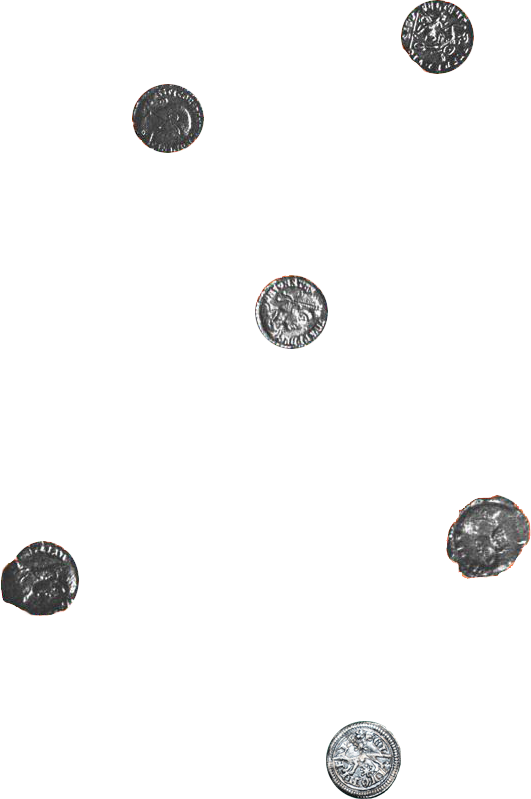
The next conquerors were the Romans, who by 9 BC had extended the borders of their empire to the line of the Danube, bringing the local Celtic population under their rule. Following the military occupation of Transdanubia, the Romans soon established an excellent network of roads. One such road ran from the Zala Valley through Fenékpuszta, Keszthely, and Tapolca—passing near Szigliget—toward Aquincum. A smaller branch of this road likely led to the Roman settlement at Szigliget, probably following the route of today’s road to Tapolca. Traces of this settlement can be found on the southern slopes of Antal Hill, in the area between the Avasi Church and the Szigliget mill. During vineyard cultivation, numerous Roman graves, stone sarcophagi, vessels, jewelry, farming tools, and Roman coins have been discovered in this part of Szigliget. Although these finds do not precisely determine when the Romans first settled here, they clearly prove that Roman culture and lifestyle had taken root between the 3rd and 4th centuries AD (c. 300–350). In 1948, objects found in two Roman graves on the southern slope of Antal Hill, including 68 bronze coins, along with Roman artifacts from Szigliget preserved in the museum in Keszthely, all indicate that by this time the local population lived according to Roman customs, practiced advanced agriculture, and was familiar with viticulture. It is also presumed that the medieval church once standing on the site of the Avasi Church was built using parts of an earlier Roman structure.
During the Migration Period
In the 5th century AD, the Romans abandoned Transdanubia due to attacks by the Huns, who occupied the region for a short time. After the collapse of the Hunnic Empire, around the mid-6th century, the Avars incorporated the territory of present-day Hungary into their powerful and well-organized empire. Under Avar rule, the Roman-Germanic settlements around Keszthely continued to exist. Their material culture is clearly distinguishable from other Avar-period archaeological finds, and in archaeological literature, this group is referred to as the “Keszthely culture.” In Szigliget, two graves associated with this group have been discovered. Among the finds were characteristic silver basket-shaped earrings, as well as an ornate pin, three beads, a bronze ring, and a bronze belt fitting. In addition, a Migration Period vessel has also been identified in the area of Szigliget. Based on these findings, it can be assumed that the local population of Roman origin survived the invasions of the Huns and other peoples, and, adapting to the new circumstances, became integrated into the Avar Empire. In the mid-9th century, following the defeat of Avar rule by the Franks, a Slavic principality emerged in western Transdanubia as a Frankish vassal state. The inhabitants of Szigliget likely belonged to this polity as well—at least for a short period—until the arrival of the Hungarians.
Szigliget Becomes Hungarian

Our conquering Hungarian ancestors occupied the western part of Transdanubia around the year 900. The area between the Tapolca and Káli Basins became part of the estates of Kál horka, and later his son Bulcsú—associated with the Vérbulcsú or Lád clan. This is evidenced by place names such as Köveskál, Mindszentkálla, Szentbékkálla, and Badacsonylábdihegy (known as Lád in the Middle Ages), as well as several now-vanished medieval villages recorded in charters. By the end of the 10th century and the beginning of the 11th century, unoccupied lands between tribal territories, border zones (gyepű), and confiscated estates came under the authority of the prince and later the king, administered through the system of county castles. Szigliget likely belonged to these lands, as it is mentioned among the possessions of Zala Castle until the early 12th century. The center of the small settlement was located around the Avasi Church. A charter from 1121 informs us that the extraction of stone and the burning of lime for the construction of the Almád Monastery were carried out by four families (mansio), commissioned by the Atyusz clan, who had by then become the new landowners of the village. In addition to these families, the donors granted to the monastery a central portion of pasture, woodland, and meadow from the estate called Zeglegeth, along with six serf families with ploughlands sufficient for three ploughs, seventy horses, one hundred cattle, and a mill. These donations clearly indicate that the village had a relatively large population in the early 12th century. For a time, little is known about the later fate of the settlement. However, structural and stylistic analysis of the tower of the Avasi Church—compared with the churches of Egregy, Zánka, and Felsőörs—suggests that these buildings were already standing by the late 12th or early 13th century, and were likely the work of a local workshop.
Castle Hill Receives Its Crown

In the first half of the 13th century, Szigliget came into the possession of Kalián, ispán (county head) of Zala, before reverting to the king, who in 1259 granted it—together with the county—to his son, Prince Stephen. A year later, however, Szigliget gained a new owner. Following the devastating Mongol invasion, King Béla IV resolved to strengthen the country by building stone castles, as only these could withstand similar attacks. This intention is clearly reflected in a charter from 1260, in which the king granted one of the islands of Lake Balaton (Szigliget) to the Benedictine Abbey of Pannonhalma, instructing them to build a fortress where the local population could find refuge in times of danger. Although the Mongol invasion caused less damage in this region, from the mid-13th century onward, a series of castles were erected in the surrounding area at strategically suitable locations (Hegyesd, Csobánc, Tátika, Rezi, Tihany, Sümeg). Abbot Favus of Pannonhalma likely considered the construction of a well-fortified castle important for maintaining connections between the extensive Benedictine estates in Pannonhalma, Tihany, Zalavár, and Somogyvár. The castle was completed within two years. At that time, it was much smaller than the ruins visible today; its present size is the result of later expansions over the centuries. The rapid construction was probably made possible by the work of local quarrymen, lime burners, masons, and craftsmen and serfs from nearby Benedictine estates. King Béla IV was so impressed by the “good and useful” castle—as he described it in one of his charters—that in 1262, shortly after its completion, he reclaimed it from the Benedictines, granting them other lands in exchange. This decision was likely driven by political and strategic considerations: to counterbalance the growing power of regional oligarchs and to curb lawlessness in the area. This is underscored by the fact that between 1275 and 1289, the royal castle of Szigliget was seized by Bishop Péter III of Veszprém, a member of the Héder clan. He removed the valuable ecclesiastical treasures stored there—liturgical garments, banners, ivory caskets, and crystal ornaments—belonging to the monastery of the Pok clan, transporting them to Veszprém. These were only returned in the early 14th century. This was the first recorded attack on the castle, and it was likely taken by stratagem. From this time onward, the fate of the village and the castle became closely intertwined, often to the detriment of the local population and the development of the settlement. Obligations owed to the landlord had to be delivered at the discretion of the castle captain. Contemporary sources paint a clear picture of the hardships faced by the people. According to a charter dated 1300, Acintus, the castellan of Szigliget, plundered neighboring estates, including that of a defenseless widow. Another official, a deputy castellan named Mihály, was excommunicated by the Bishop of Veszprém for assaulting the parish priest and chaplain of Tapolca and for forcibly seizing the bishop’s mill.
A New Village Center Emerges
The close relationship between the village and the castle explains why the Árpád-era settlement gradually began to decline. At the same time, a new settlement developed below the castle, on the site of today’s village. By the early 15th century, it was referred to as Újfalu (“New Village”) or Szigliget (Wyfalu, Zegligeth). From the historical outline above, it can be concluded that a small population likely survived in the area around the Avasi Church—an area already inhabited during Roman times—through the period of the Hungarian Conquest. Over time, they became assimilated into the Hungarian population, and together they laid the foundations of the village of Szigliget at the same location. This assumption is supported by Árpád-era pottery fragments found around the Romanesque Avasi Church (built at the turn of the 12th and 13th centuries), as well as by a boundary survey recorded in 1420. In the old village—by then already abandoned—the stone church dedicated to All Saints still stood, having previously served as a parish church. As the old settlement declined, the new one continued to develop. To locate Újfalu, it is worth examining present-day Szigliget: the new center of the village likely formed in the small area near the road leading up to the castle, where today the Garden of Heroes and service buildings can be found. A new church was also built in this emerging center. On the site of the present-day church, before later renovations (in 1727 and 1877), there stood a Romanesque building with a semicircular apse, probably already dating from the 13th century. It is highly likely that this church was constructed by the Benedictines at the same time as the castle.
New Lords of the Castle
In 1344, King Louis the Great granted the castle and its estates to Stephen, son of Lőrinc, who was descended from the lineage of Bishop Bulcsú of Csanád. By the mid-14th century, however, Szigliget had passed from royal ownership into the hands of the Móriczhidai family of the Pok clan. This family had already held lands in the immediate vicinity of Szigliget since the mid-13th century. For his bravery in the Battle of Nagyszombat, Miklós Móriczhidai was rewarded with the neighboring estate of Hegymagas. In the turbulent period following the deaths of Kings Béla IV and Stephen V, the family likely treated Szigliget Castle as their own—though it is also possible that Béla IV had granted it to them before his death in recognition of their loyalty. Between 1275 and 1289, the treasures of the family’s monastery were kept in the castle, indicating that a member of the family resided there either as owner or castellan. By 1348, Miklós’s grandson Simon is already mentioned in charters as lord of the castle. For nearly a century thereafter, the castle and its estates remained in the possession of the Móriczhidai family. It was during this period that the inner castle was likely constructed, while the old Árpád-era village of Szigliget gradually declined and the settlement of Újfalu below the castle became more populated. This development was supported by the economic prosperity during the long reigns of Louis the Great and Sigismund. In 1424, the Móriczhidai family entered into a mutual inheritance agreement with the Lack family, stipulating that if either line died out without heirs, their estates would pass to the other. Although the family did not become extinct, they nevertheless lost Szigliget: in 1441, King Vladislaus I granted it to Jeromos Kolos of Némai, who was related to the Lack family, in exchange for an estate of 200 serf plots. As central authority weakened, acts of violence became more frequent. In 1442, the castellan of Szigliget, Flóris Berky, attacked and plundered the Almád Monastery. Amid these chaotic conditions, the castle changed hands several times. After Ferenc Kolos, the king granted it to Balázs Barócz, who in 1444 pledged it to the abbot of Pannonhalma for 3,000 gold florins. However, he attempted to prevent the transfer of the castle to Miklós Újlaki and János Hunyadi—both of whom laid claim to it. Despite his objections, Szigliget soon became part of the Újlaki family’s holdings. A royal charter from 1453 records that five villages belonged to the castle: Felsőtomaj, Hegymagas, Nagyfalu, Sziget, and Újfalu. The mortgage rights to the estate continued to change hands several times—passing to the Szentgyörgyi family, then to István Csornai, and eventually returning to the Újlaki family. It is likely that during their ownership—one of the most powerful noble families of the 15th century—the castle was further expanded. It remained in their possession for nearly seventy years. The Móriczhidai family, however, never relinquished their ancestral claims to Szigliget, consistently asserting their rights in various agreements, where Szigliget is regularly listed among their former estates. Nevertheless, they were unable to regain the castle. After the death of Lőrinc Újlaki in 1521, this part of the vast, fragmented estate was sold by his widow, Magdalene, to the Lengyel family of Tóti.
In Battle with the Crescent

Although the Abbot of Pannonhalma repeatedly protested against the transfer of the castle, King Louis II confirmed the Lengyel family’s ownership of Szigliget in 1526. However, the defeat at the Battle of Mohács brought another turning point in the castle’s history. As the Lengyel family sided with John Szapolyai, King Ferdinand I confiscated their estates on the grounds of disloyalty and granted Szigliget to Bálint Török of Enying. The castle’s castellan, István Kulcsár, was unwilling to hand it over peacefully to Török’s envoy, Imre Martonfalvay, who ultimately captured it through stratagem without firing a shot. Török appointed Martonfalvay as captain of the castle, and he soon began repairing the “great, desolate fortress,” restoring its roofs and outer walls. He also constructed a new tower, several bastions, cellars, and a well. As a result of his work, the 16th-century layout of Szigliget Castle was essentially established—a layout that remained largely unchanged in later centuries. This form and a perspective view of the castle were preserved in drawings made by G. Turco in 1569. In the 1540s, Szigliget Castle returned to the possession of the Lengyel family. The guardian of the underage heirs—Bálint Magyar of Palona, a renowned border fortress warrior respected by both Hungarians and Ottomans—became captain of Szigliget and Fonyód, as well as administrator of the associated estates. Ottoman raids intensified, and battles became increasingly frequent in and around Szigliget. Magyar Bálint’s bravery became legendary: one day he fought at Fonyód, the next at Szigliget, and at other times near Tihany or Veszprém. From his letters, we learn that from 1558 onward he spent more and more time at Szigliget Castle. In the autumn of that year, a raiding Ottoman force attacked the village late in the evening. With only a small number of defenders, Magyar Bálint rushed to aid the villagers, but in the struggle against the superior enemy force he nearly lost his life. Only through his exceptional courage and strength was he able to break through enemy lines and retreat back to the castle. Ottoman harassment did not cease, but until his death Magyar Bálint successfully resisted their advances and prevented the expansion of Ottoman-controlled territory in the region. In 1571, though seriously ill and confined to Szigliget Castle, he still managed to repel another attack. A letter dated May 12, 1573, reports his death. The same letter notes that his warhorse was laid to rest at Keresztúr—an honor typically reserved for the most distinguished warriors of the 16th century, further testifying to his renown. After his death, Szigliget and Fonyód returned to the Lengyel family, but in the summer of 1575, the Ottomans captured Fonyód. Szigliget Castle itself was also in poor condition, as evidenced by repeated financial support granted in 1580 by the royal chamber to István Lengyel for its repairs. However, this funding was only sufficient for essential maintenance. In 1588, István Lengyel petitioned the king to exchange Szigliget for the estate of Rajka, citing the castle’s deteriorating condition, inadequate military equipment, and the proximity of Ottoman forces. Since border fortress soldiers were rarely paid, they were often forced to secure their own livelihood—sometimes by raiding Ottoman forces even during times of peace, or by extracting provisions from Hungarian villages. In 1613, and again in 1618 and 1622, orders were issued to provide proper garrisons and pay for the castles of Szigliget, Keszthely, and Csobánc, to prevent unrest among unpaid soldiers. In 1606, János Lengyel served as captain of the castle. At this time, Szigliget also hosted a flotilla of Balaton boatmen, along with around one hundred infantry, twenty-five cavalrymen, and the naval forces of Sándor Bakáts. Around 1630, Boldizsár Lengyel became captain, commanding a garrison of 12 hussars, 25 infantrymen, and one artilleryman, with a monthly pay of 125 forints. The financial strength of the Lengyel family gradually increased, in parallel with the general weakening of Ottoman power. During Boldizsár’s tenure, the castle was reinforced and repaired, as evidenced by a mid-17th-century depiction, a ground plan, and a carved stone coat of arms that once adorned the gate. After him, Gáspár became captain and financed the construction of boats at his own expense to defend against Ottoman attacks from Lake Balaton. In 1647, he requested 400–500 men to clear and improve the Szigliget harbor so that military boats could move more easily. Miklós Zrínyi, then lord lieutenant of Zala County, ordered the dispatch of 200 men to assist. Such preparations were necessary, as the Ottomans also maintained a fleet on the southern shore of the lake. Contemporary letters report significant damage caused by Ottoman boat raids along the Zala shore—villagers and castle inhabitants were often taken captive during sudden attacks. The Ottoman “naval base” was located at Siófok, where in 1647 a fleet capable of transporting a thousand men was stationed.
A Declining Castle – A Growing Village

the Castle in the Background
As Ottoman power declined, the military significance of the castle gradually diminished. The Act III of 1655 reduced the garrison to 10 hussars and 25 hajdús (infantry soldiers), and by 1671 only 5 hussars and 20 hajdús remained under the command of a single hajdú lieutenant. After the end of Ottoman rule, Szigliget no longer played a role in the defense of the country. The castle became simply a costly part of the Lengyel family’s estate. Its decay began at the end of the 17th century, when a lightning strike during a storm caused a fire that destroyed much of the structure. At that time, charters, accounts, and other records stored in the castle were also lost. The process of destruction was greatly accelerated by Emperor Leopold I’s decree of 1702, which ordered the systematic demolition of most Hungarian castles, citing the need for stability and the empire’s strained finances. During Rákóczi’s War of Independence, the Kuruc troops occupying Transdanubia no longer used the castle, indicating that it had already fallen into complete disrepair. Its stones were gradually carried away and reused in the construction of houses in the rebuilding village below. In the second half of the 18th century, the Lengyel family built a mansion beneath the castle, embedding their ancestral coat of arms—once adorning the castle gate—above its entrance. The marshlands surrounding Szigliget, which had once contributed significantly to the castle’s defense, were gradually drained. A map from 1792 already shows drainage canals, as well as the streets and houses of the village that had developed below the castle. Economic growth during this period is reflected not only in these drainage works—which significantly increased arable land—but also in the rising population and the growing number of newly built houses. The former importance of the castle is still symbolized in the village seal from 1861, which depicts a fortress. During the reconstruction of the village and the construction of the mansion, stones from the ruined castle were widely reused, and the remaining walls were further dismantled. Ownership of Szigliget also continued to change: through the daughters of Gáspár Lengyel, the estate was divided between the Putheány and Inkey families in the early 19th century. Their serfs were emancipated as early as 1844. Later, Szigliget came into the possession of the Esterházy family, who remained its owners until the end of the Second World War. The village, whose economy was primarily based on agriculture, gradually expanded and eventually reached its present size. The village center, the beach, and the harbor were developed, and by the end of the 20th century, tourism had become its main economic focus.