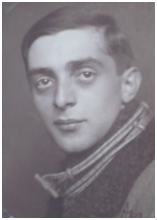
 The pages of our newspaper have often introduced us to people who contributed greatly to the development of Szigliget. Among the local patriots, we must not overlook the name of Dr. László Fehrentheil-Gruppenberg, who passed away in Szigliget seventy years ago this year.
László Fehrentheil-Gruppenberg was born on 30 January 1896 in Brassó (Brașov). He completed his studies at the Budapest University of Technology, graduating as a general engineer, though he devoted himself largely to geodesy and land surveying. He was the twelfth person in the university's history to earn a doctorate in geodesy. From 1927 he lived in Budapest, working as a lecturer at the University of Technology while also running a private practice. He became a member of the Board of the Engineering Chamber, and served as a land-policy adviser to Archduke Albrecht. He played a major role in the re-survey of the capital carried out between 1935 and 1944.
He was commissioned to prepare cadastral maps for several Transdanubian settlements, which is how he first came to Szigliget in 1927. Initially he lived with his wife, two daughters, and colleagues in a rented flat in Belsőhegy, but he was so taken with the area that he purchased a plot on the slopes of Óvár. As he himself put it, Szigliget reminded him very much of his homeland, Transylvania.
Between 1927 and 1929 he took part in the cadastral survey of Szigliget. The survey, consisting of 28 map sheets, provides an accurate picture of the settlement's land-ownership structure in the period between the two World Wars. The original map sheets are today preserved in Budapest, at the Map Repository of the Institute of Geodesy and Remote Sensing.
Szigliget owes Fehrentheil not only its surveys: he also took the first steps towards transforming the village into a holiday resort. During the years he spent there, he did everything in his power to promote the community's development. He secured an agreement with the Hungarian State Railways to add Szigliget's name to the list of lakeside railway stations. He arranged for the road along the shore to be surfaced, and the famous row of poplar trees in Szigliget is also attributed to him.
He was instrumental in providing Szigliget with a boat harbour. His close friend Géza Bornemissza, Minister of Industry, also lent his support in obtaining the necessary funding. Furthermore, Fehrentheil himself designed the harbour building. He faced considerable opposition from the landowner of the time, Count János Esterházy. The Count was unwilling to allow any part of the reeds along the shore to be cut. According to him, all his Szigliget properties ran at a loss, and only the reed beds saved him from bankruptcy. After lengthy negotiations, the engineer persuaded the Count to lease the area of the current beach to him for a nominal annual fee of one forint.
In the meantime, he built a summer house on his plot and frequently invited friends to visit, eager to show them Szigliget and its surroundings. From that point on, his goal was to promote Szigliget as widely as possible. He invited Aladár Bodor and his family, the Mitterpacher family, the Béldi family, the Baumgartner family, the Bors family, and the Darvas family. Together they founded the Szigliget Bathing Association, whose members paid membership fees, and with the income generated they began developing the beach. The reeds were cut, and the bank was tidied up. Two changing cabins were built — one for women and one for men. A jetty was constructed, along with a 2×2-metre floating raft that became a great favourite with children, who would leap into the water from it. Even then, a rescue boat with a permanent attendant was kept in readiness.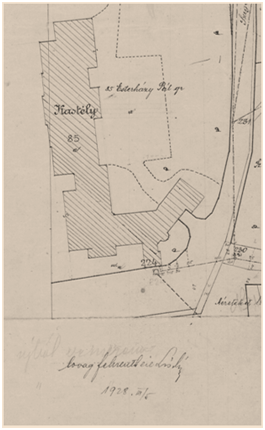 He produced promotional brochures about Szigliget, and in 1937 wrote a booklet entitled Walks in Szigliget, in which he takes readers on a distinctive tour of the settlement's landmarks. He photographed and collected the ornate façades of Szigliget's wine-press houses.
He left behind a substantial body of professional literature. He had a particular interest in land consolidation in Hungary and its effects, and published several works on the subject: Land Consolidation as a National Planning Task (Budapest, 1933); Land Consolidation and the Reorganisation of Our Agriculture (Magyar Szemle, 1934); The Effect of Land Consolidation on Crop Yields (Budapest, 1934); Spectral Analysis of Land Policy (Magyar Szemle, 1935); The Fragmentation of Hungarian Small Holdings (Mezőgazdasági Közlöny, 1936); Hungary's Need for Land Consolidation (Budapest, 1942). He was also interested in the history of the surveying profession, publishing several studies on the subject: Roman Land Surveyors; Underground Permanent Marks in the Middle Ages; Surveying Instruments of the 18th Century (Budapest, 1933); Roman Settlements (Budapest, 1935); Old Hungarian Land Surveyors (Budapest, 1937). He summarised his experience of the Budapest re-survey in a 1936 publication, and also produced works relating to the collection and research of place names.
In 1943 he was struck by an incurable illness. In his final weeks he had himself brought to Szigliget by ambulance, declaring: "I want to die there." He passed away on 9 July 1943; his grave is in the cemetery at Szigliget. The esteem and gratitude of the community towards the former engineer are still felt today — a memorial plaque in the village commemorates his significant legacy and his deep love for Szigliget.
(Biographical details kindly provided by Bernadette Fehrentheil.)