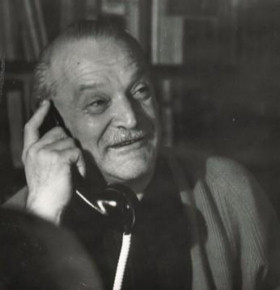
GÁBOR LIPTÁK
THE MAIDEN RAID OF SZIGLIGET
It was summer. Sweltering. Hot winds blew. Lake Balaton had warmed up like a puddle, and the buckets drew lukewarm water from the wells. The ice in the ice cellars had melted. The Turkish army — more than three thousand warriors — sweated, staggered and swayed in the heat, stretched along the steaming shoreline from the fortress of Kanizsa to the earthworks at Aliga.
The soldiers could have endured the heat well enough, but it was far harder to contend with boredom. Here they lived, on this foreign land, where the Hungarians stepped out of their way — and when they could not step aside, there was still no talking to them, for no one understood their language. True, they drilled and marched a great deal — but a man cannot spend five years doing nothing but drilling and marching! And indeed, not a single shot had been fired in five years, for the Emperor in Vienna and the Sultan in Constantinople had made peace with one another.
Of course, it was not a true peace. At night the sentries kept a sharp watch, peering at the campfires on the far shore. When — more than a hundred years ago now — Buda had fallen, the road lay open toward the Somogy shore of Lake Balaton. The Turks soon built strong earthworks at Fok, fortified Balatonendréd, and raised a castle at Szemese — all to oppose the hated captain of Fonyód Castle, Bálint Magyar of Palona. For the fortress of Fonyód, the last Hungarian stronghold on the Somogy side, held out for more than thirty years. Four sieges were launched against it by the Turks of Pécs, Koppány, Simontornya and Kapos, yet the castle remained Hungarian until the death of Bálint Magyar. After that, no one could defend Fonyód any longer, and the entire southern shore of the lake fell into Turkish hands. That too was seventy years ago, and ever since, the Turk had remained master of this region.
Now only the border fortress knights on the northern shore defended the strong Hungarian castles; they watched from that side, and the Turks from this side, each waiting for the other to stir. But they waited in vain. There was peace, there was silence, there was a heat wave. Out of sheer boredom the soldiers caught flies, and those too lazy even for that sat down in the shade of a tree and yawned.
When a soldier begins to feel bored, he is no longer a real soldier. He starts to think. All manner of foolish notions come to him — for instance, what he is doing here, far from home, while his family goes hungry back there. And thinking of his hungry family, he notices what misery these poor Hungarians around him live in; and once a soldier begins to pity the enemy, the edge goes off his sword, his rifle no longer finds its mark, and he becomes as useless in battle as a whimpering, wailing old woman.
The commander of the Turkish forces was called Ali Korbuzsi. He was a merciless, savage, bloodstained man — which was precisely why he had been entrusted with the command. In common speech he was known as the "Bey of Fok," for he kept his headquarters at Siófok. True, he could not boast the proud rank of bey — he was in fact only a colonel of Janissaries, a *chorbaji* — but under his authority fell every garrison, every fortification and every harbour along the southern shore of Lake Balaton. He also commanded the Turkish war fleet, which was stationed in what is today the harbour of Siófok. His fleet at Fok harbour could carry a thousand men; with his raiding parties he kept the coastal population in constant fear. For those times it was considered a formidable fleet! Among the galleys were some capable of carrying sixty to eighty men, along with equipment, horses and provisions.
That summer, where the muddy-bedded Sió flows out of Lake Balaton, twenty-seven sailing barges of various sizes, hewn from oak, lay at anchor. The vessels were arranged in a ring and lashed together with heavy ropes, like a floating fortress. At the centre — the place of honour — rode the broad-bellied flagship, whose mast stood twice as tall as those of the others.
In the heat, Ali Korbuzsi had moved himself onto the water. On the flagship a magnificent campaign tent had been erected — cone-shaped and lined with eastern carpets — and before it two sentries stood motionless day and night, fixed as posts. One was a Turkish musketeer in billowing trousers, holding a horse-tail battle standard; the other wore the close-fitting red dolman of the Janissaries, belted at the waist, and raised the blood-red Janissary banner embroidered with a silver crescent and a curved sword. For Ali Korbuzsi — himself a Janissary — had a thousand Janissaries serving under him in addition to his three thousand regular troops. And one day Ali found himself realising that among his increasingly soft and dissolute soldiers, it was nearly only the Janissaries he could still count on. When this realisation struck him, he did not sleep for two nights out of anxiety — and then he resolved to stir his warriors' blood with some skirmish or other.
His spies brought word that Gáspár Tóti Lengyel, the captain of Szigliget Castle, had lent a hundred and twenty of his best soldiers to the captain of Csobánc Castle for a few days. True, a few small Hungarian vessels — called *sajka* at the time — lay somewhere hidden in the reeds to defend the bay and the castle, and their crews were quartered up in the small fortress that still stood in those days atop the Óvár peak; but this little band could not stand against the powerful Turkish fleet. In other words, the beautiful landscape of Szigliget, the Golden Shell, the rich slopes of Badacsony, were for the time being left without an armed guard. Here was a fine opportunity to deal the Hungarians a sharp blow — to loot and plunder without bloodshed, and put some fire back in his soldiers' hearts. He gave orders, therefore, that nine large war galleys be rigged at once and set sail with the evening breeze toward Szigliget Castle. He instructed that all armed confrontation be avoided, for the Turkish Porte would take a dim view of any breach of the peace — but he gave his soldiers free rein to eat and drink, to burn and destroy and plunder to their hearts' content.
At this news the Turkish camp buzzed like a hive before swarming. Excitement seized every soul. Hemp ropes creaked and sails snapped as the galleys, carried by a fair wind, sailed out in a long war-column from behind the spit at Fok. Even those left behind were filled with joyful anticipation; for the bey had decreed that a great victory celebration should be held the following evening — when the fleet was expected to return — and the prospect of rich plunder and a merry feast lifted the spirits of even the drowsiest common soldier.
The Rókarántó is only a modest little hillock, but if one climbs up to its ridge, the castle of Szigliget comes into view. The castle is too far away, of course, to make out individual figures — unless one has exceptionally keen eyes. Then again, a fifteen-year-old girl tends to have good eyesight, and when love sharpens it further, she can pick out her sweetheart not only in Szigliget Castle but on the very face of the moon. So there is no need to wonder that the beautiful Rózsi Szekfű was only pretending to hoe the vineyard for her own amusement, and instead let her gaze wander along the castle's bastions and embrasures, spotting here and there the lanky figure of the young scholar Ferkó Darabos, her betrothed. Once or twice she even waved — but no one waved back from the castle.
This soon put her off waving — and off hoeing too. *"It can wait till tomorrow,"* she thought, and opening the door to the cellar beneath the press-house, she propped the hoe neatly against the corner. With that she might well have set off for home — to the little house by the shore, where her mother was already waiting with a warm lunch — but on top of one of the barrels she spotted her little hand mirror, and began admiring herself in it. Poor Rózsi was truly undone by her own vanity; she became so absorbed in gazing at her reflection that she did not hear the desperate pealing of the alarm bells.
They were ringing out in Szigliget, in Réhely, in Tomaj, in Tördemice, and in the chapel on Saint George's Hill, and the people fled — some up into the mountains, some — those who could — into Szigliget Castle, where they hoped to find shelter. For a hundred years, the desperate tolling of the alarm bells had meant one thing: *"The Turks are coming — run for your life!" The widow Máténé Szekfű, the moment the bell-ringing reached her ears, ran out in front of the house and called for her daughter. She could not see Rozi, but she could see the hillside thick with fleeing people. She assumed her daughter had already run up to the castle along the Rókarántó ridge, and set off that way herself. Up at the castle, however, she searched for Rozi in vain — she found only Ferkó Darabos on the southern bastion, where three stout soldiers were holding the slight young scholar.
"Let me go!" Ferkó shouted, trying to shake off the gripping arms. "You have no right to give me orders!"
It seemed for a moment that he might actually throw off three men at once, when Gáspár Lengyel, the castle's captain, arrived. At his calming words the young scholar became somewhat more willing to listen.
"Settle down, my boy. You cannot rush alone to certain death."
"Am I to stand by and watch my betrothed be put in chains? Give me a sword and let me go after her, I beg you!"
When Rozi's mother understood the meaning of these words, she rushed to the parapet. She arrived just in time to see three savage Turks dragging Rozi toward a galley moored at the shore. The mother let out a shriek, and calling her daughter's name between sobs, collapsed onto the stones of the parapet.
Poor Rozi had lingered too long in the cool half-darkness of the wine cellar, until the bells had fallen silent. She had set off home without a care, walking between the neatly tended rows of vines, her mind full of her betrothed. She looked forward to the evening, when Ferkó would knock at their door as was his habit, take down his *nyenyere* from the wall — that neckless little instrument that resembled a small double bass — and softly humming sweet, tender love songs, gaze at her with his walnut-brown, faithful eyes, until Szekfűné called them both for supper. The sun was shining, and a heavy dark-bellied cloud hung over Badacsony as though the mountain fancied itself a volcano again, puffing smoke from its peak. Wasps droned among the ripening grape clusters, and Rozi's thoughts were all of Ferkó, the summer sunshine, the cloud over Badacsony, and the sweet-voiced *nyenyere*. Of the Turks she thought nothing at all. She did not notice the galleys hidden in the reeds — and even if she had, she might not have suspected anything amiss, for the Hungarians also had boats at Réhely. The Turks had not been heard of in Szigliget for years, and it would never have entered even her dreams that the enemy might attack in broad daylight the villages and farmsteads sheltering in the shadow of the proud castle.
She crossed the threshold of her home with a light heart. When she saw three wild-faced musketeers among the bare and plundered walls, her eyes went wide with terror and the scream stuck in her throat. Instinctively she began to back away, but the largest of the Turks blocked the doorway. Then he laughed with satisfaction, and binding Rozi's hands behind her back, surrounded her with his companions and set off with her toward the shore. Through a veil of tears Rozi could just make out that the last remaining Turk took down Ferkó Darabos's carefully guarded instrument from the wall and tucked it under his arm. With that he rounded off the work of plunder no less thoroughly than a fire might have done: from the widow Szekfűné's tidy little homestead, not a single head of livestock remained, not a single pot in the pantry, not a single garment in the chest. Only the nails hammered into the walls were left behind — perhaps so that when the owner of the house returned, there would be something to hang himself from.
It is possible that Szekfűné, in her final despair, might have taken her own life, had Gáspár Tóti Lengyel not dripped hope back into her soul. The valiant castle captain had watched the raiders' devastation from the bastion, grinding his teeth in helpless fury. He reproached himself bitterly for having lent his soldiers to the men of Csobánc. He immediately sent out mounted messengers — one galloping to Csobánc to order every able-bodied fighting man back home; another riding in haste to Tihany, to seek the aid of Captain Mátyás Karacsin for a counterattack; and a third racing down to the bay of Szigliget to order all the war-barges fitted out. Seeing the captain's resolve, even Ferkó Darabos grew calm.
"My good captain," the young scholar addressed him, "if all goes according to your orders, when might I hope for the release of my abducted betrothed?"
"The day after tomorrow we shall fall upon the fleet at Siófok, and may I never wield a sword again if we do not smash those cursed galleys to splinters."
"But what of the girl until then?" the young man cried out.
"Until then, may God watch over her," said the captain.
"I would feel better if I could watch over her alongside God, my good captain. I promise I shall do nothing reckless — but have mercy on me and on that innocent girl. Allow me to take my *sajka* and spy out the Turks' position, and bring back word of their preparations."
Lengyel Gáspár needed only one glance at the young man's face, burning with fury and grief, to know that even the heaviest chains in the castle dungeon could not hold him. So he armed him with a double-edged dagger, which Ferkó hid up his sleeve, and gave him leave to follow the homeward-sailing Turks in his *sajka*, keeping a cautious distance. And so it was that after the horse-tail galleys had departed, a small, light *sajka* slipped out from the dense reeds — and like a speck of dust daring to follow a destructive gale, it trailed the warships on their homeward journey.
It was already growing dark the following evening when the watchman at the tip of the Siófok spit sounded his horn. At this signal the Turkish camp sprang to life. Victory fires were lit along the shore, the cooks began scouring their cauldrons, the kitchen hands set to gutting fish, the tents were hung with flags, and a great bustle of cleaning and tidying broke out everywhere. Many ran down to the shore to watch the ships come in — but dusk had already fallen, then full darkness settled over the lake, and still the ships were late. The watchman had sounded his horn at the right moment, as ordered, when he spotted the first sail appearing in the Tihany strait — but the delay was caused by a sudden calm that had overtaken the ships, and it was nearly midnight by the time they dropped anchor in the bay of Siófok. By then the calm was complete; the lake gleamed with the heavy, motionless stillness that comes before a storm. On the shore, however, drums rolled and horns rang out as Ali Korbuzsi, mounted on his white horse and followed by twelve standard-bearers, reviewed the ranks of the Fok army.
At the end of the review he had himself rowed out to the flagship. There he heard the report of the raiding sailors and praised them for their bold feat of arms, accomplished without the shedding of a single drop of blood — so that in truth they had not technically violated the Sultan's peace decree either. Meanwhile all the stolen and plundered goods were gathered from the war galleys onto a separate vessel, and Ali Bey was invited to inspect the haul. Among the Turks it was the custom that the commander might freely choose from the spoils, even if he had taken no personal part in the raid.
Ali Bey and his retinue crossed to the plunder ship. Since the vessels were moored in a ring, lashed together with ropes, he did not even need a boat but walked from ship to ship across plank bridges, all the way to the last galley. There he saw everything that had been looted from across the Aranykagyló region — from the humblest fisherman's hut in Tomaj to the finest manor house in Szigliget — cleared from stables, cellars, rooms and pantries alike. Most of it was food, clothing and much near-worthless stuff: the meagre belongings of a plundered people in an impoverished land. Even in the wealthiest homes there was hardly anything of value left to steal. The gentry had long since fled the border regions; only the poor had stayed, and they had scarcely more than the clothes on their backs. Nevertheless, among the spoils were two sizeable iron chests, dug up by the marauders from the cellar of some abandoned village manor. These contained considerably greater riches. Now they lay on the deck before the *chorbaji*, their hasps forced open, full of jewels, lace, and gold and silver treasures. Gold-embroidered cloaks, women's bodices sewn with pearls, ornamental swords with diamond-studded hilts in velvet scabbards lay scattered across the deck — and at the far end, a girl crouched with her hands bound behind her back, her forehead resting on her knees, weeping.
Ali Korbuzsi's eyes paused on the girl for a moment, then turned back to his soldiers, who were lifting a beaten gold *násfa* — a pendant ornament — from one of the chests. Rubies as large as hazelnuts glittered in it. The *násfa* lay on a cushion of red velvet, flanked by a pair of earrings set with teardrop-shaped pearls.
"I believe," said the leader of the raiding ships, "that not even the empress of the infidels has a finer jewel in her treasury. Permit us, mighty bey, to lay it at your feet."
But Ali Korbuzsi barely spared the treasure a passing glance. He walked over to the girl.
"Show me your face, girl!" he said to her.
Rozi Szekfű knew no Turkish, and the unfamiliar words frightened her. She looked up and saw before her a man with a fierce gaze but magnificent dress — wearing a white cap with a silver spoon tucked into it, billowing trousers of blue velvet, and red morocco leather boots. In her fright she covered her face; but Ali Korbuzsi had seen enough in that one glance at the girl's tear-stained face.
"I choose the girl," he told his companions. "Untie her bonds and bring her to my ship."
Rozi understood none of this either. She could not make sense of suddenly being freed from her ropes — but when strong hands seized her and began shoving her after the great lord, she cried out in despair.
The scream carried far across the still, motionless water. For Ferkó Darabos, who was just then rowing his little *sajka* into the bay of Siófok, it multiplied his strength and fury a hundredfold. A few minutes later his skiff slid silently up against the side of one of the dark, looming galleys. The young scholar crept up onto the ship's deck with the steps of a cat.
In that ravaged and burned-out Hungary, where the Turk had sprawled for more than a hundred years, the greatest share of suffering had fallen to the children. No one counted them, and so history could not record how many fatherless, motherless children wandered the roads, how many cruel doors were slammed in their faces, how many nights they spent in rain and wind with a cloudy sky above their heads, and how many times they lay down on an empty stomach, gazing up at the starry sky for supper. Ferkó Darabos was one of that wandering multitude. For more than ten years he had roamed the roads. Wherever he was taken in, he picked up something new. He learned German and Turkish. He could read and write, play the flute and the zither, carve figures from wood, paint pictures on parchment, steal apples from trees and fish from other men's hooks. Only one thing he could not do: be afraid.
In all his wandering and tumbling through life, he had never had the time to learn fear. He had always found his way out of even the most desperate situation, landing on his feet like a cat. On the long journey from Szigliget to Siófok, his only worry had been not to arrive too late — and when the dark water carried Rozi's scream to his ears, he was glad: his betrothed was still alive. And if Rozi was alive, he would prise open the very blazing gates of hell for her.
On the ship he had crept aboard, he found no one. It was dark and silent; only the glow of the campfires shimmered from the shore, with the rolling of drums and the shrieking of pipes drifting across the water. He gripped his dagger and stole across the deck. He stopped and listened. No one was following him. He could not have said why — perhaps on instinct — but with his razor-sharp dagger he cut through the hemp rope binding the two ships together. He crept on from ship to ship in this way, slicing through every rope behind him, drawing ever closer to the torchlight. And there he found whom he had been looking for. Facing a magnificently dressed Turkish soldier, flanked by two powerfully built, dark-skinned giants, his tearful betrothed stood trembling. Ferkó Darabos felt his heart give such a thud that it seemed to shake the very vault of his chest.
From the corner of his eye, in the smoky reddish glow of the torches, he also noticed that the ship was laden with treasure — chests, carpets, clothing — showing that the Turks stored the plunder from their raids here. Eight enormous Janissaries guarded the precious goods, armed to the teeth, motionless as statues of cruelty. Yet Ferkó Darabos was not frightened by these fearsome sentries. He stepped across the swaying plank that separated the plunder ship from the rest of the fleet, leaped to stand before the commander in a single bound, and immediately threw himself to the ground, right at the feet of those red morocco boots. His only concern was to cast a meaningful glance at Rozi, commanding her to silence — for the cry of joy and alarm was already half out of her.
The commander recoiled, but seeing the unarmed youngster, he bellowed at him:
"How did you get here, you impudent whelp? Who gave you leave to appear before me? Or did you come sneaking in to spy on my ships?"
"My name is Ferkó Darabos, glorious Padishah," the lanky boy replied in rapid Turkish. "I did not come to spy, but at the bidding of the illustrious Pasha of Buda, to offer you all my service, skill and cunning."
At the mention of the Pasha of Buda, Ali Korbuzsi's stern features softened somewhat — but his suspicion did not lift.
"Did the Pasha of Buda give you a written *firman* informing me of your coming?"
"He did, gracious Padishah — he had a sealed *firman* written for me — but three Hungarian brigands robbed me of it along with all my worldly possessions at the gates of Fehérvár."
This explanation did little to reassure Ali.
"I am not in the habit of believing nursery tales," he said irritably. "Demonstrate your skills, and from that I shall judge whether the Pasha of Buda truly saw fit to commend you to my confidence."
"For that I shall need to stand up, radiant-faced Padishah," said Ferkó, with brazen composure.
"Then stand up," Ali allowed.
Ferkó stood up, drew a deep breath, and began listing all his abilities. Had even half of it been true, there would have been no wiser, more celebrated or more clever man in the whole world than Ferkó. He reeled off enough learning for at least ten men to the open-mouthed Turks. He claimed he could read the colour of the clouds to tell without fail whether it was worth casting a line, and that he could fence, ride and shoot arrows with equal skill. And he could play music — on the violin, the zither, the pipe, the flute, the elderwood whistle, the battle horn, the drum, and besides those listed, on two dozen other instruments...
"Stop!" Ali Korbuzsi cut him off. "If you know so much about instruments, we shall put you to the test right now. We have just been debating what sort of musical contraption this might be. If you can make it sound, I will grant your every wish — but if it stays silent, I will have your head struck off on the spot."
With that he pressed into Ferkó Darabos's hands his own *nyenyere* — the very same that had hung on a nail in Szekfűné's kitchen only the day before.
Not a flicker of surprise crossed Ferkó's face. On the contrary, he assumed a very grave expression. Then he explained that this was an exceedingly rare instrument, and that to his knowledge there were precisely seven people in the world who knew how to play it. Fortunately — he added, casually — he was one of the seven.
"Then play something on it," commanded the Bey of Fok.
"With pleasure," said Ferkó. "For that, however, you must sit down, Padishah of radiant countenance."
The Turk sat down obediently.
"Furthermore, your servants must sit down as well!" the young man went on, pressing his demands.
Ali Bey gave a sign, and his retinue and the eight bloodthirsty-looking Janissaries alike sat down on the ship's deck.
"And besides that," Ferkó continued with his conditions, "everyone must close their eyes."
Ferkó looked around to make sure no one was peeping — and was relieved to see that no one was. The Janissaries had been drilled to such iron discipline that they would sooner have gone blind to a man than stolen so much as a sideways glance. Reassured, Ferkó stepped over to the trembling Rozi.
"Don't be afraid, my darling," he whispered in her ear — and pressing a kiss to her lips, he struck the strings of the *nyenyere*. And the sweet, melancholy Hungarian song rose up in Ferkó Darabos's clear young voice, which rang like the chiming of silver:
*Gnarled and leafless, ancient oak tree,*
*They follow weeping in my wake,*
*I am written down for soldiering,*
*That is why I cannot go home.*
*My dear mother entered my name,*
*When she rocked me in the cradle,*
*My dear mother wept over me,*
*When she gave me her sweet milk.*
*Weep must she, that dear mother,*
*Whose two sons are both soldiers,*
*They fall into each other's arms,*
*And weep like a driving rain.*
Ali Bey listened to the song, and listened. At first only a sweet restlessness settled over his heart. The sobbing of the strings lulled him; the caress of the boy's voice brushed against him like a cool breeze. A gentle smile crept onto his lips. But as the song continued — the words of which he did not even understand — the warmth gradually left his face, his soul grew sadder and sadder, unknown sorrows tore at him, an inexplicable anguish tormented him. Music holds a secret that no one has ever managed to unravel. It rises from somewhere deep within, and at its sound the bottomless well of our memories stirs and brims over. Ali Korbuzsi too — the Turkish Janissary commander — felt that he had heard that song somewhere before. Perhaps as a small child cradled in arms — from his mother; perhaps on an evening scented with acacia blossom, beneath a starlit sky — from his father.
And yet Ali Bey had known neither father nor mother, and could not have found the place of their home anywhere on this earth. But the song came from just that place — from the unknown, from the past, from that dimming world to which the Bey of Fok would never find his way back. Grief tightened around his heart, and when the song ended, a tear rolled from his closed eyes. He wiped it away quickly, lest anyone see — a Janissary must not weep. But the warmth of that moment of tenderness could still be heard in his voice:
"Just now I promised to grant your wish. For this song you deserve that I keep my word. What do you ask of me, boy?"
Ferkó smiled at Rozi and said:
"Give me this girl, Padishah of radiant face." And with a beaming expression he pointed to his betrothed. Ah, if only he had not done it! The sudden movement sent the dagger slipping from his sleeve, and it clattered to the middle of the deck, right in front of the girl.
The Bey of Fok let out a roar. His men threw themselves on Ferkó, twisted his arms behind him, tied him to the mast, shouted, shook their fists and threatened him. Ferkó believed his final hour had come — but the notes of the song were still ringing in Ali Korbuzsi's ears. He would not have had the strength to stand by while harm came to Ferkó. So he dismissed the Janissaries and proclaimed that the spy's head would be taken at dawn. He did not look at the boy again, fearing that in a moment of weakness he might reverse his own order. He mastered himself and left the ship with his retinue.
The torch-bearers departed too. Darkness fell over Ferkó; only a lone little oil lamp flickered at the stern. He had been bound so tightly that he could not stir. He gazed up at the sky and saw a heavy, dark cloud drawing across the stars. He felt the first breath of wind on his skin and knew a storm was coming. He lay there in sadness, condemned to helplessness — until a sweet whispering voice reached his ears:
"Where are you, Ferkó?"
"Tied to the foot of the mast, my little Rozi," he whispered back.
"Do you want me to cut the rope from you?"
"How could you cut the rope?" he asked.
"With your own dagger. They left it here."
A minute later he felt his hands and feet moving freely. He drew his betrothed to him, held her close, kissed her. Then he looked up at the sky. The dark cloud had already spread over Tihany, the breeze had strengthened into a wind, and the ship rocked beneath them.
"Rozi, slip the dagger into my hand," he whispered.
"What are you going to do with it? The ship is full of guards!"
"I'm going to show them Szigliget Castle," Ferkó whispered in his betrothed's ear.
Gripping the dagger's handle, he crawled silently to the bow of the ship. With one motion he cut the anchor rope. He felt the ship slowly begin to move from its place; the wind was blowing from a favourable direction, and if it strengthened even a little, it would soon carry them out onto the open water.
The wind, as though it had sensed Ferkó's wish, did not strengthen just a little — it strengthened greatly. Within a few minutes it began to softly play in the rigging of the mast. Ferkó saw the shore lights slowly recede, shrink, and fade. They were already far out, beyond the spit, when one of the dozing sentries noticed the trouble. He let out a frightened yell, called his companions, and a great clattering in Turkish broke out, followed by even greater running about, shouting and scrambling. Meanwhile the wind built into a storm, and the ship drifted helplessly on the heaving water toward Tihany, without sails or helmsman.
On shore, no one heard the cries for help from those left on the drifting ship. They soon had other troubles to face. They discovered that some devilish hand had done grave damage to the floating fortress. Five, ten, perhaps even more ships were held now only by their anchors, and the arm-thick ropes that had lashed the fleet together hung empty in the water. When the storm struck the bay of Fok, all these ships began to move at once. They could not break free, for their anchors pulled them back. They lurched toward each other, drew apart, and surged together again; the waves tossed them up and drove them down, and when the storm was raging at its full fury, those ships crashing back and forth — like so many axes — battered and smashed each other. By the time the storm had blown itself out, scarcely a serviceable Turkish vessel remained in the harbour at Fok, and there were galleys of which nothing could be seen above the water of the bay but a shattered mast.
The storm also caught Ferkó's ship broadside in the middle of the lake. The Janissaries ran back and forth half out of their minds. Not one of them was a sailor, for a Janissary knows only one science: the science of war. They could not manage the helm, they could not raise the sail — and a ship without a helmsman is a helpless plaything of the storm. Now it heeled to one side, now the bow reared above the waves, which swept across the deck again and again, until at last one of the Janissaries was washed overboard into a watery grave. A comrade who reached out his hand to the drowning man broke his own arm in doing so, and after that the rest lost their heads entirely. More than their heads, in fact — they lost their pride as well, for after a time they came to Ferkó, who was still sitting at the foot of the mast with his arm around his betrothed, and said to him:
"You who are skilled in so many things — do you know the art of seamanship?"
Ferkó looked his wretched jailers up and down and replied with cool disdain:
"I am accustomed to steering vessels ten times this size, in storms a hundred times as fierce!"
"Then have mercy on our lives, sir, and take our ship's helm in hand!"
Ferkó shook his head with a show of regret:
"I would gladly help you, but I cannot. I must comfort my betrothed."
"But we shall all perish in the waves!" cried the desperate Janissaries.
"Not all of us," Ferkó consoled them. "My betrothed and I can swim."
"But we cannot!" the Janissaries howled.
"I would like to help you," said Ferkó, "though it is exceedingly awkward." He fell silent as a wave swept across the ship and carried off another Janissary. The remaining six shouted all the louder.
"There are only six of us left, sir!" they cried in despair.
"I will steer the ship out of the storm — if I may take it where I choose."
"Do whatever you see fit, sir, and from this moment we are your servants."
"That I know well," said Ferkó after a moment's thought, "but only until the wind dies down. After that you'll find your tongues again, you miserable heathens! I won't touch that helm until you pile every last one of your weapons at my feet."
On dry land the Janissaries feared nothing — but now the barge tossing on the waves, the howling wind, the whole hellish roar of the tempest had stripped them of every shred of courage, and they trembled like old women.
"Take our weapons, sir — we cannot fight the water anyway," they pleaded. "Only lead us out of this hell!"
When they had thrown their weapons at his feet, Ferkó searched each of them one by one to make sure they had kept nothing back. Then he selected two pistols, two *handzsárs* — short, curved-bladed stabbing weapons — and a razor-sharp dagger, and with a single kick sent the rest into the water. He tucked one pistol into his own belt, handed the other to his betrothed, and did the same with the two *handzsárs* and the daggers.
Then he turned to the Janissaries:
"Very well — I shall save you, but I will not lie to you. Know that I am taking this ship to Szigliget, and know also that you will be prisoners there — but it is better to be a living prisoner on dry land than a dead Janissary at the bottom of the lake. And it is better to eat fish on prisoner's rations than to be eaten by fish yourselves. I give you my word for your lives," he continued. "Not a hair on any of your heads will be harmed, and I also promise you that at Szigliget Castle you will be treated with humanity. And if you conduct yourselves like decent men there, in time you may become free men as well — in Hungary even a prisoner is better off than a Janissary is among your own people."
Turkish soldiers were not accustomed to such humane talk. They were enormously taken with this young fellow, and the oldest among them cried out almost happily:
"And not a hair on your head will be harmed by us on this ship either! Look — I had hidden a dagger under my coat; now I throw that away too. Give your orders, sir, and we will obey."
Ferkó now set them to the ropes, telling each one when to pull. Within a few minutes the sails were up — but only where and as much as the ship could bear in that furious weather. Now the ship went where Ferkó wished. He gripped the tiller firmly, and after seven and a half hours of fortunate sailing, dropped anchor in the bay of Szigliget in the early morning.
From the Óvár they had spotted the ship long since. They saw it was a Turkish galley, and were greatly puzzled that it was approaching alone. The *naszád* crews took to the water and hastened out to meet it, ready for battle. But from the hilltop they could already see that no enemy was coming.
Ferkó had fashioned a flag from his white shirt and a Janissary's red coat, and Rozi waved her white kerchief at those on shore. By the time the galley docked, Gáspár Lengyel's hussars had arrived from the castle — and standing on the shore was the trembling Szekfűné as well, weeping with one eye and laughing with the other as she embraced her daughter, whom she had given up for lost.
The hussars had brought a led horse, and Ferkó Darabos was lifted onto it. Even amid all this, he took care to ensure that no one harmed the six surviving Janissaries. Four infantrymen were assigned to escort them, but they were not even bound. Up at the castle they could work — on the earthworks, for a year or so if need be.
Ferkó lifted Rozi into the saddle beside him, and together they set off toward the castle in something close to a triumphal procession. At the armorial gate the captain was waiting for them. He embraced the heroic young man who had single-handedly brought back his betrothed — and captured a ship into the bargain from the plundering Turks of Fok. To celebrate their return a great festivity was held; the entire castle garrison made merry with them, and even the *nyenyere* grew weary from three days of song.
Ali Korbuzsi raged and fumed, frothing with anger, and swore bloody revenge against the Hungarians of Szigliget. But it took a full year before the Turks could fit out a new fleet — larger and stronger than before. By that time, however, the Szigliget fleet had also been reinforced, and though the Turkish ships were bigger, the Balaton *sajka*-men had the better of them in skill and valour.
The Bey of Fok never had his revenge. He could attack by water or by land, but the gates of Szigliget Castle never opened before his army — and the proud fortress, then or ever after, never fell into Turkish hands.
AFTERWORD
(excerpt)
It is thirty years since I sat on the steps of an old cellar on the slopes of Tamás Hill near Füred, watching Lake Balaton bathed in the evening light.
With young eyes and a young heart I took in the enchanting landscape and listened to the murmuring words of Aunt Pintér.
The old woman sat beside me on the stone, a basket of freshly picked almonds in her lap. And she told stories. With her dim eyes blinking straight ahead, she shelled the smooth-skinned, gleaming new almonds from their green husks, and all the while quietly murmured to herself.
As the landscape grew ever more beautiful and ever more dreamlike in the evening light, so the old woman's stories grew ever more real. I gazed at the marvellous scenery: the volcanic ridge of the Tihany Peninsula, Csúcs Hill; the windy plateau of the Óvár — where a Roman watchtower once stood — with the outlines of the Iron Age earthwork ramparts, and on its slopes the mysterious cave dwellings once inhabited by Russian monks; the curve of the Örvényes bay, where, it is said, a sunken village lies beneath the water. Behind it all I sensed the great mountain of Badacsony, the basalt volcanoes of the Tapolca Basin, with the wild and romantic ruins of Csobánc and Szigliget on their peaks.
The old woman told stories — of sorcerers, fairies, and a witch who lived not very far from there in a "devil's castle" — and she also told how the lake came into being, the lake that lay slumbering below us. By the time she reached the end of her tale, I half believed I could see fairies dancing on its crimson-shimmering surface to the music of crickets.
Since then I have wandered the shores of Balaton, gathering everything beautiful, interesting and instructive about this region. I have tried to map the traces of natural and human history. Some of what I found was worthy of a fairy tale. In this volume I wished to journey once more through the whole region — if only in stories. I therefore selected from its memories in such a way that every essential element of the Balaton shoreline and its atmosphere should flash up, at least briefly, in the tales. Those motifs that had already been written about before, but without which the picture would have been incomplete...
In some places I followed a well-trodden path and relied on things already known in the literature. In others I had little more to go on than a single name, an image, a gravestone or a natural phenomenon. I have noted these in the annotations as well. I always dug as deep as I could at the roots of the stories, wherever that was possible.
The surroundings of Lake Balaton are exceptionally rich in the traces of geological and human history: volcanoes, rocks, remarkable plants, buildings, gravestones, caves. These very often have some explanation or story attached to them — part memory, part the fruit of scholarly research. The traditional elements of these stories have rarely grown into tales, legends or narratives of literary merit on their own. The people living around Lake Balaton have not shaped them into folk tales either. The folk poetry of the Balaton region is part of the whole body of folk poetry; local motifs were woven into it mainly through a name here or the distinctive ways of life of the region there.
The ambition to entwine the natural and historical traces of a region with tales and legends is barely a hundred and fifty years old. The greater part of such stories about the Balaton region were also born in the age of Romanticism. Lake Balaton and the Balaton region are today the joy of the whole nation. The tales, legends and stories in this book are all linked to the natural, historical or literary heritage of the entire Balaton region, and one of their important aims is to evoke the atmosphere and distinctive beauty of the Balaton countryside.
This book was written for the young people of Hungary, about one of the most beautiful parts of our beautiful homeland.
(Gábor Lipták: Aranyhíd \[Golden Bridge\]. Budapest, Móra, 1968. pp. 139–163, 421–423.)