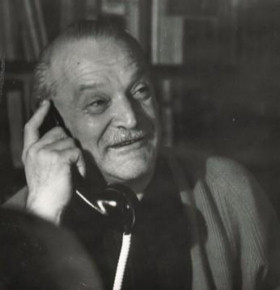
GÁBOR LIPTÁK
THE ARMY OF THE BOATMEN
Along the shore of the Szigliget bay, three small hills rise into the air. On the peak of Óvár the remains of the old castle walls still stand; the valley is protected from the north by the cliffs of Kamonkő, and the Queen’s Skirt truly spreads over the land like a wide, beautifully curved petticoat.
At the foot of the shores lies the small harbour, while the castle itself stands much farther away, crowning the hill above today’s village. The people simply call Szigliget “the Island,” for long ago it was surrounded by water, marshy swamps, and bogs.
In those bitter times, when the Turks ruled the southern shore of Lake Balaton, heroic frontier soldiers defended the Hungarian strongholds in this region. The valiant captains of Szentgyörgyvár, Keszthely, Veszprém, Tihany, and Szigliget, together with the brave people of the land, repelled the Turks’ ever‑renewed attacks. The decades‑long struggle continued on the water as well. From the harbour at Fok, Turkish raiding boats constantly harassed the lives of the lakeside inhabitants. Most often they struck at night, burning villages, plundering houses and wine cellars, and carrying off peaceful residents.
At Szigliget, a few small Hungarian boats—sajka, as they were called—waited hidden somewhere in the reeds to defend the bay and the castle. But how could they have stood against the strong Turkish galleys?
Thus it happened that one summer dawn, Gáspár Tóti Lengyel, captain of the Szigliget castle, awoke once again to find the boatmen standing before him, their clothes dripping with lake water. They were soaked to the bone. One held a broken boathook, another an old oar blade; around their waists hung their only weapons that water could not ruin: a naked sword tied over a ragged jacket. Their faces were dark with anger and despair.
“If only we had had a single proper boat, my lord,” began old Döbrentei, whose awkwardly hanging arm proved he had not fought his first battle with the Turks. “But like this…!” He sighed bitterly and pointed out the window.
Below, thick black smoke curled above the houses of Révhely, and though the sound did not reach this high, Gáspár Tóti Lengyel could almost hear—just as he had so many times before—the desperate wailing of the women and the cursing of the men.
“They set the reeds on fire, the scoundrels,” said the old man. “And since we had sent our few decent boats under Badacsony, we could only take to the water with these battered little skiffs.”
“And you could do nothing?” asked the captain.
“Only what we could, my lord! By the time we struggled out to the edge of the reeds, one of our boats collapsed and sank like an axe. On the other two only so many of us could fit that we could do nothing but watch as the marauders landed from their new, strong galley. And if only our boat had been the only one to meet such fate,” he continued, “but my good friend Dániel Kiss barely escaped from the wreckage, and his boat followed the other to the bottom of the lake… Then they sent two skiffs after us. Those two swift beasts slipped into the reeds so quickly it was sorrowful to see. And we—neck‑deep in water—hid among the sedge, the reeds, the rushes. And the Turk… well, my lord, you can see for yourself.”
From the castle window there was a wide view of Lake Balaton. After listening to the boatmen’s report, Gáspár Tóti Lengyel watched as two heavily loaded Turkish boats moved southward on the water. They were carrying their plunder toward Siófok: wine, livestock, grain—everything they could seize in the short time they had.
The captain’s hand clenched into a fist, his teeth ground with fury. He knew well that those boats were carrying away the last remnants of the already impoverished people living below the castle.
But the captain of Szigliget preferred action to lamentation. His despair quickly turned to anger, and striking the table with his iron fist, he roared:
“No! If Vienna does not care, if the chief captain does not care, I do not accept it! János!” he shouted to the soldier guarding the door. “Send for the carpenter, and call everyone in the courtyard who can handle an axe or a hatchet! Have the fishermen come up from Révhely as well. Bring old Ábris too—he once built a galley in Tihany. And from the manor below, summon the forester at once!”
But that fine gathering wanted nothing to do with building a larger boat.
“How could we build ships as big as the Turks’?” asked the carpenter. “We have neither the men nor an engineer!”
“It would be better,” muttered the forester, “if we received a boat like the ones in Tihany or Veszprém.”
“You know well,” said the captain irritably, “how those galleys got there. They floated them down the Danube from Vienna to Győr, then hauled them up the Rába to Vasvár, and from there carried them on wagons to the Zala. By the time you wait for such a thing, not a single boat will remain in Szigliget to defend the shore.”
“And not a single able‑bodied man or unplundered, unburnt house will remain between Badacsony and Keszthely,” added Dömötör, the one‑armed boatmen’s lieutenant, grimly.
“Then what?” asked the clerk.
“We start, and we build it ourselves,” said the captain. “Old Vince was there when the Tihany boat was assembled, and you all have seen enough Turkish galleys.”
“And who will be the engineer?” asked the carpenter. “For unless the emperor orders one here, none will come to such a war‑torn place.”
“You,” said the captain. “Old Vince will add his knowledge to yours, you will discuss everything with the forester and the blacksmith, and the clerk will put on paper whatever you devise.”
“Wait, my lord,” said the carpenter, striking his forehead. “There is someone else here who understands such things, though he never speaks of it. He studied in Vienna, but got mixed up in some rebellion. He fled, and chose frontier life over imprisonment.”
“Tell him that if he helps, his freedom will be all the more secure,” said the captain.
Everything happened just as the captain ordered.
The plans were devised by the carpenter from the manor, the engineering student who had fled Vienna, two old boatmen, and old Ábris, while the clerk wrote everything down. The soldiers knew what they wanted, old Ábris remembered the old ship, and the carpenter knew what was possible. He guided the clerk’s hand whenever the drawing went astray.
The forester watched the work thoughtfully.
“On the edge of the Kamonkő forest I know two huge, dried‑out oaks. I’ve been eyeing them for two years, but in such times who would think of such things? They would make fine planks.”
Gáspár Tóti Lengyel disliked long deliberation. The next day axes were already ringing in the forest, and by afternoon buffaloes were dragging the logs to Révhely. On the third day the carpenter, with a dozen frontier soldiers quickly trained as helpers, was already working cheerfully on the ship. Up in the smithy four or five newly made assistants helped the master kindle the fire, forge nails, and bend iron bands.
A few days later, when the captain visited the harbour, the hull of the galley was already taking shape.
The carpenter looked at the emerging ship with expert eyes and affection, but shook his head quietly.
“I’ll finish it somehow,” he said, scratching his head, “but how does my lord intend to launch it? This is no skiff to slip between the reeds. If you’ve sized it like this, it will be a true galley…”
“That is exactly what I want,” said Gáspár Lengyel, his eyes gleaming. “One like the dozens the Turks have in the harbour at Fok.”
“Then my lord must also provide a harbour like the one at Fok,” said the carpenter. “For no man alive will get this out of this sea of reeds otherwise!”
“You’ll need many men,” added the forester. “A whole army to cut a path for the ship. And the castle folk alone are far too few.”
“The villagers will help,” said the carpenter.
“The womenfolk?” asked the forester mockingly. “Or the sick, the old, the crippled? For every able man among them has either been carried off or is fighting with the soldiers.”
“And the soldiers?” asked the forester.
“They are guarding Réhely,” said old Dömötör quietly. “If you take even these few warriors away, what will become of the people? The Turk strikes this poor land again and again precisely because he knows that by the time troops arrive from the castles, he has already finished his vile work. And if you take away even the garrison of this little fortress”—he pointed toward the castle—“not a soul will remain in the village.”
“Leave it to me,” said the captain softly. “By the time these boats are finished, their way to the water will be ready as well.”
Then he returned to the castle, sat down in his chamber, and summoned his clerk.
“Write, my son, exactly as I say,” he began. “Pay heed to every word. And before the ink dries on the paper, have the mounted lad waiting in the courtyard—he must ride to the Lord Lieutenant of Zala County with this letter! Let us begin,” continued the nobleman, speaking slowly and deliberately. “The entire near side of the Balaton region—castle folk and villagers alike—has suffered great harm from the Turkish boatmen, for we have no ships; thus our people have often fallen into Turkish captivity. Therefore, at my own expense, I have had a boat brought and built…” Then he continued: “Now I would like to have a place made for ships that can hold several hundred men, where they may remain in safety.”
At that time, the Lord Lieutenant of Zala County was Miklós Zrínyi. He was an excellent poet, a great military leader, but above all, the finest of Hungarians. He knew well how the frontier soldiers lived. And he also knew that because of the imperial treasury, the castles were decaying, the ships were rotting, and the soldiers received no pay. He could not change these things. But he helped wherever he could.
When he saw the scar-faced, sweat-soaked, dust-covered rider carrying Gáspár Tóti Lengyel’s letter, he wasted no time with questions.
“Tell your captain,” he began, “that I understand his complaint, and nothing would please me more than to relieve his distress as soon as possible. But before you return home, take this letter to Chief Magistrate Gergely Sáry.” Then he turned to his scribe. “Write, my son, that from Lengyel Gáspár’s report we understand that the cutting of the island’s reeds must be done for the sake of the ships; therefore he must send two hundred men without delay to Szigliget for two days.”
A few days later, a strange army gathered around the church of Réhely. A battered host of serfs; in their hands axes, hatchets, reed‑cutters, scythes—whatever they could find. Some dragged skiffs on carts, others carried planks for walkways on their backs. A people long‑suffering, slow to bow to lord or noble, who in those days mostly worked for others. But now they took up tools for their own defense. The ships of Szigliget protected their hearths and their peace, and the warriors of the frontier castles were of their own blood.
In those days the reeds stretched almost to the tower standing at the foot of the hill. There they began the work, and from there they cut their way toward the water. They worked not only by day but by night as well, often waist‑deep in water, in the faint light of the moon. They could not light torches—not only because the reeds would catch fire at once, but because from the opposite shore the Turks could see even the smallest flame.
Those soldiers who were not on watch helped with the work; the women carried wine down from the great castle cellars… By then Gáspár Tóti Lengyel’s wine barrels were nearly empty, yet he begrudged no drink for this cause. The villagers brought whatever their pantries still held: bread, roasted bacon, ribs. And those who had nothing else brought a little fresh goat’s milk.
Before the two days were even over, they had already cut a path through the reeds for the boats. But the serfs added a third day as well, so they could build a proper harbour for the new ships in the Szigliget bay.
Thus worked that strange army. Gáspár Lengyel walked among them, encouraging them as if they were his soldiers in battle.
For indeed, it was a battle—and no small one! The people of the Golden Shell, bathed in summer sunlight, may be proud of it to this very day.
Whoever visits Szigliget today can still find everything around the ruined castle. There stands Kamonkő; on the site of Óvár the remains of the old stronghold are still visible; and below, now far from the lake, near Réhely, the tower of the Árpád‑era church of Avas guards the memory of old times. Once the water reached this far. And here, Gáspár Tóti Lengyel’s warriors, nameless heroes, the army of the boatmen, defended their homeland as best they could, with whatever means they had.
NOTES
Szigliget once rose as an island from one of the marshy bays of Lake Balaton, which was only drained in the 18th century. The ruins of its former stronghold still stand on the castle hill. After the disaster of Mohács, King Ferdinand granted Szigliget to Bálint Török, whose clerk, Imre Martonfalvay, built and strengthened it. Later the castle returned to the Tóti Lengyel family.
In his surviving diary, Imre Martonfalvay wrote many interesting things about Szigliget and the life of the frontier boatmen of Balaton.
The castle never surrendered to the Sultan, even though the Turkish army ravaging the country built strong fortifications and a harbour at Siófok. From Martonfalvay’s writings we also know that already at the beginning of the Turkish era, ships sailed the waters of Balaton between Somogyvár, Szigliget, and Keszthely. Evliya Çelebi, the Turkish world‑traveler, wrote that forty or fifty boats carried merchants and visitors from one castle to another. From the southern shore, Turkish raiders attacked by night, burning villages and carrying off peaceful inhabitants. It took time before the defenders of the castles received ships to resist the terrible destruction. Old documents also call the crews of the galleys “csajkások.” The Turks attempted to take Szigliget by water as well.
Near the still‑standing ruins of the Avas church, Réhely was once a crossing point. During the Turkish era, in 1616, Sándor Bakats, captain of the “csajkás boatmen,” was stationed here. In 1647, Gáspár Tóti Lengyel, then captain of Szigliget, requested that the reed‑choked harbour be cut open. He mentioned that the Turks already had about a thousand ships at Fok. Miklós Zrínyi, poet and Lord Lieutenant of Zala County, ordered two hundred men to be sent to Szigliget to clear the reeds. The village near Réhely perished during the Turkish times.
(Lipták Gábor: Amiről a kövek beszélnek. Budapest, Móra, 1978. pp. 129–137; 327–328.)
(Gábor Lipták /1912–1985/ writer, cultural historian. His home in Balatonfüred became, from the 1950s onward, a beloved meeting place and frequent retreat for many outstanding figures of literary and artistic life. He also worked on the literary and cultural history of the Balaton region.)