 Szigliget has been inhabited since prehistoric times. In this wonderfully beautiful region, the Kál and Lád clans settled here during the Hungarian conquest. In the 11th–12th centuries, the chapter of Veszprém, the abbey of Pannonhalma, and the royal udvorniks owned estates here. After the Mongol invasion, Favus, abbot of Pannonhalma, began building the castle in 1262, which still reminds us today of the glorious and sometimes painful events of our history.
Among the ecclesiastical monuments of the village, the first to mention is the Avasi church ruin, located in the southeastern part of the settlement. The first charter referring to Szigliget dates from 1121, in which the parish church built in honor of All Saints is already mentioned. The Avasi tower may have been built by craftsmen belonging to the Atyusz clan, just like the churches found in Zánka, Felsőörs, and Egregy. The name of its first priest has also survived; he was called István. A rectangular base tower that becomes octagonal is connected to a southeast–southwest oriented nave, and attached to it are the sanctuary, the sacristy, and the ossuary. Since the church is not oriented eastward, and the walls of the nave and triumphal arch are built in a herringbone Roman pattern, it is almost certain that the church was built on the foundations of a Roman building once standing here. A few fresco fragments were noticed on the interior walls of the church in the last century. Unexcavated graves can still be found in the surroundings of the church ruin.

If we take a closer look at the location of the Árpád-era settlement found here, we can see that it lies in a valley. This easily accessible target may have been exposed to increasingly frequent attacks, which led to the depopulation and destruction of the village. The population moved to the more protected area near the castle hill and began laying the foundations of Wyfalu, or Újfalu (“New Village”).
The predecessor of the church standing here was likely built during the 13th century, at the same time as the castle. Our first record of the church appears in a charter from 1424: “Wyfalu is inhabited, it also has a stone church, which borders the Tapolca stream.” Since the castle had previously been in the hands of the Benedictine Abbey, it is natural to assume that the Benedictines built a church near the castle. Further charter references to the church are known from 1493 and 1550. At that time, Szigliget was the center of the parish district, and the parish seat operated in the castle. Tördemic only became a mother parish in 1750. Since 2016, Szigliget has been a filial church of the Balatonederics Parish.
A certain licentiate named Orbán is mentioned in writings from 1655. Due to Turkish raids, there was a shortage of priests in the border fortresses, and in such cases, suitable lay believers temporarily replaced the parish priest with the bishop’s permission. The word “licentiate” comes from this: “permission,” with which the bishop authorized a layperson to perform ecclesiastical service.
The first entry from the parish chronicle, the *Historia Domus*, dates from 1722. The keeping of parish registers began in 1723.
In 1725, we read in the diary of Bishop Padányi Bíró Márton that the Tóti Lengyel family had a church built in Szigliget. This building is likely depicted in the only known floor plan description created by Franz Storno. The church had a semicircular sanctuary, a crypt beneath the sanctuary, a towerless reinforced retaining wall, and a gable. The floor plan shows the altar, the baptismal font, the staircase of the pulpit, and the holy water stoup. The patron saint of the church at that time was Saint Mary Magdalene.
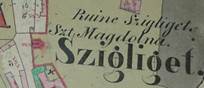
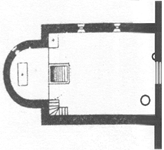
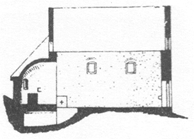
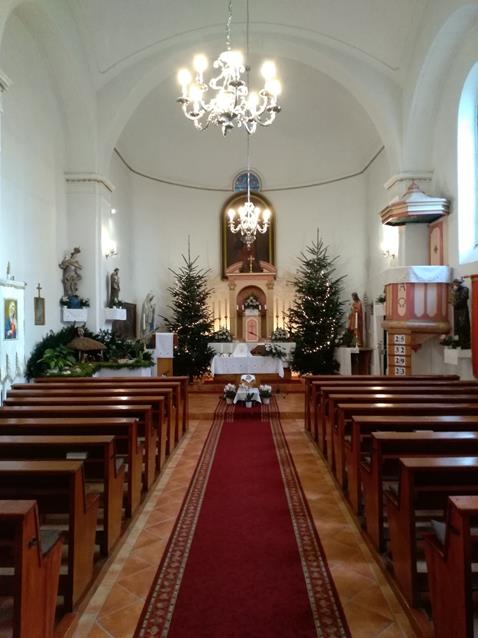
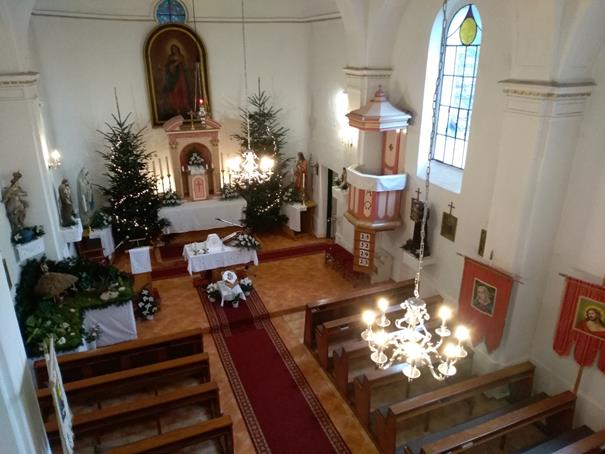
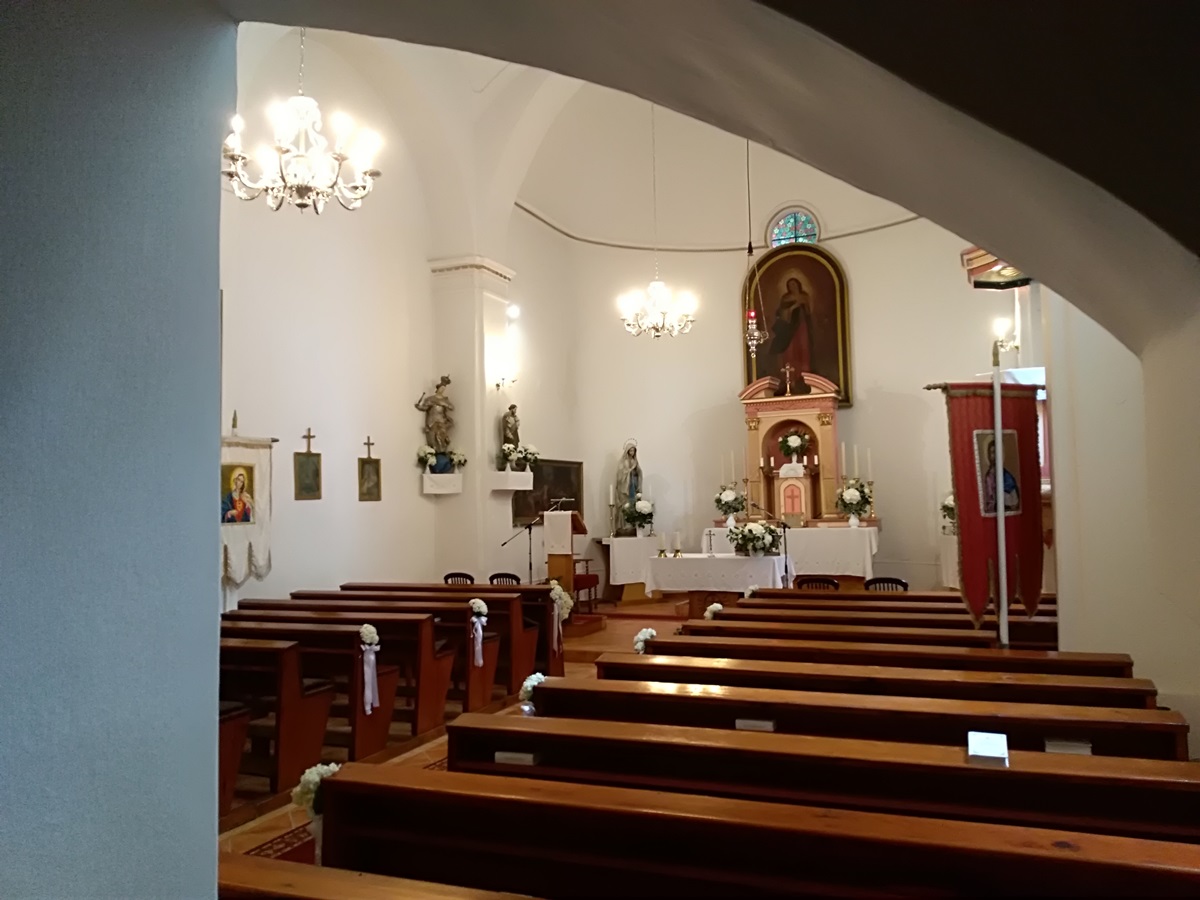
At the beginning of the 1800s, the church was neglected and had become dilapidated by the middle of the century. Renovation efforts were initiated by János Szivós, the school warden. Construction could then begin, during which the church was largely rebuilt. According to the research of local historian András Töreky, the medieval southern and northern walls were preserved, but the church was extended along its main axis, and the sanctuary’s arch and dome were significantly rebuilt. This is when the church acquired its modest neo-Gothic, Baroque-like form known today. The new church was completed in 1870. After the reconstruction, a new patron was chosen for the church. In a charter created after the construction, they requested the bishop to consecrate the renovated church in honor of the Holy Name of the Blessed Virgin Mary, instead of Saint Mary Magdalene, the patron of the former ruined church.
In 1894, the church roof was repaired, and the building received a wooden shingle roof. In 1896, the church underwent another renovation.
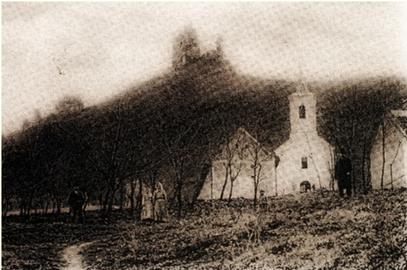
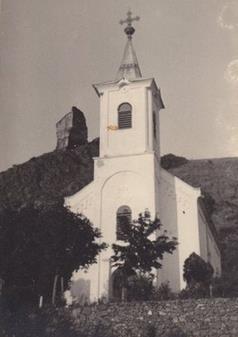
For a long time, the pastoral duties were carried out by the Franciscan fathers of Sümeg. Twice the people of Szigliget requested to have their own chaplain in their church, but both times the bishop rejected their wish. Thus, only three (!) masses were held annually in the Szigliget church, and for Sunday masses, people had to walk or travel by cart to Gulács or Tördemic. It was finally Gyula Debreczenyi, the parish priest, who succeeded in organizing the chaplaincy in 1927. At that time, there were three missions in the village. The chaplaincy operated until 1967.
The first confirmation ceremony in Szigliget took place in 1926. The church was electrified in 1940, and the work was paid for by Countess Pálné Esterházy. In 1945, from the chapel of the Esterházy manor, the more devout believers managed to save only a few items for the church. The painting of the Last Supper most likely also came from the manor. In September 1949, the complete repair of the tower and its roof was carried out. At that time, our church also received a new tower cross.
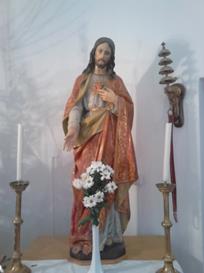
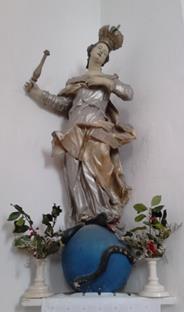
Several statues can be found in the church. The Lourdes statue of the Virgin Mary, located to the left of the altar, was purchased by the Szigliget Rosary Society in 1890. The 140‑centimeter‑tall statue was made by Josef Runggaldier, a sculptor from Gröden (Tyrol). The statue was blessed on September 12, 1890, on the feast of the Holy Name of Mary. The Sacred Heart of Jesus statue to the right of the altar was also likely made by Josef Runggaldier; it was blessed on May 21, 1899, Pentecost Sunday. The Virgin Mary statue to the right of the sanctuary was, according to tradition, brought from the Esterházy manor to the church. The Saint Joseph statue was a gift from József Bakos, a resident of Szigliget, in 1949.


The church’s original organ was a relatively simple pneumatic instrument with eight registers. Despite several repairs, it required continuous maintenance, so in 2017 the parish purchased a new digital organ. It has two manuals and can play 32 registers. Its sound imitates the organ of the Saint Pierre church of the Solesmes Abbey in France.
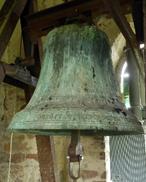


Three bells reside in the tower of our church. The oldest bell was cast in 1925 in Sopron, at the bell foundry of Frigyes Seltenhofer. The completed bell was consecrated in honor of the Blessed Virgin. Its diameter is 61.7 centimeters, making it the church’s middle bell. It weighs approximately 120 kilograms, and its tone is D♯2. The inscription on the bell reads: “Erected in honor of the Blessed Virgin by the leaders of the village from their joint donations in the year 1925. Cast at the bell foundry of Frigyes Seltenhofer, Sopron.” This bell usually rings during the second call to Mass. In Szigliget, the custom still exists that the elevation during Mass is signaled with the middle bell. Those who cannot be present may at least join “in spirit.” The other two bells of the church were made by the famous bell founder László Szlezák in 1933. The large bell was cast in honor of the Sacred Heart of Jesus. Its diameter is 70.2 centimeters, its weight 177 kilograms, and its tone is C♯2. Its inscription reads: “Sacred Heart of Jesus, lead all the inhabitants of Szigliget to Yourself.” On the other side we read: “Made in the holy year of the Lord 1933 in the bell foundry of László Szlezák, gold‑crowned master of Hungary, Budapest.” This is the bell we hear most often. The morning, noon, and evening ringing is done with this bell, and it is also used for the first call to Mass. The smallest bell, the death bell, was cast in honor of the Holy Trinity. Its diameter is 45.9 centimeters, its weight 52.5 kilograms, and its tone is A2. Its inscription reads: “Made in honor of the adorable Holy Trinity by the believers of Szigliget in the holy year of the Lord 1933, in the bell foundry of László Szlezák, gold‑crowned master of Hungary, Budapest.” The inscription on the other side: “Glory be to the Father, the Son, and the Holy Spirit, as it was in the beginning, is now, and ever shall be, world without end, amen.” The death bell rings after the evening ringing of the large bell, reminding the faithful of the deceased. The ringing technique is also worth mentioning. The large bell was made with a curved Szlezák‑type steel yoke and a falling clapper, while the two smaller bells originally rang with straight steel yokes and flying clappers when they were still rung by hand. When electrified, all bells were placed on curved steel yokes, and the clappers were cut and fixed below the striking point. The three bells together—called “plenum”—ring before Mass and at funerals.